


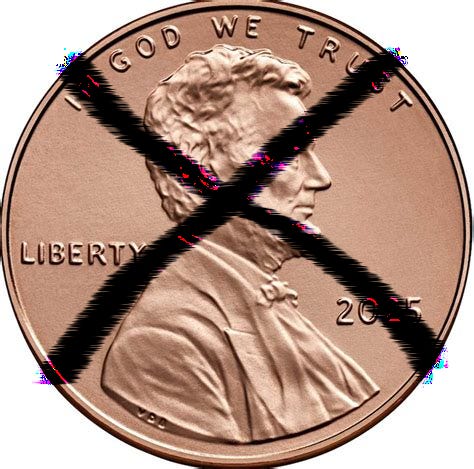
The Treasury has minted the last Penny.
Like everyone else, I have several jars filled with coins. Many are old mayonnaise bottles full of pennies. I have no intention of trading them in for “cash.” I’ll just hang on to them as relics of the past for future generations.
If there are future generations.
We don’t want to obsess over “money,” per se, because, all the economists’ obfuscations notwithstanding, money is just an accounting system. It’s a ledger of economic activity. Money is the measure of exchange for work and services and sales. What you have in your pocket, your purse, your brick-and-mortar bank, or your digital wallet, is just a record of your account balance.
I lived six years as a kid in Naples, Italy. This was in the 1960s, long before the Euro. At that time, every European country had its own colorful currency featuring historical figures, royalty, artists and cultural heroes unique to their own heritage. The paper bills came in all hues and sizes.
The lira wasn’t “worth” very much back then, at least not relative to the dollar. We had to plug 10 lira coins into the elevators to make them run. We tossed 100 lira coins (worth a few cents each) into Neapolitan public fountains to “make a wish.” They ultimately were fished out by 10 year old Neapolitan scugnizzi, the ragazzi di strada who used the small change to buy food. At that time, the 1,000 lira bill, was the size of a face towel. It was worth about $1.60.
Today, the U.S. penny is worth less than the metal and energy that’s required to mint it. The last penny to roll out of the mint was mostly made of zinc with just a thin copper plating. It costs roughly 4 cents to produce each coin.
Another way to look at it is that one dollar today buys you 25 pennies. That feels about right: today’s dollar is worth about... a quarter... in terms of its current buying power.
Inflation is just a measure of how much less you can buy with what you have. The house that you cannot afford to buy, the new car that’s priced out of your range, even the food that costs more than ever, are simply indicators that you are getting poorer.
On the other hand, Elon Musk won’t truly “earn” a Trillion Dollars in compensation for his work at Tesla, but “only” the equivalent of $250 Billion. I am not sure that makes the income disparity any better. If Mr. Musk’s Trillion Dollars is really only “worth” $250 Billion, then the average working stiff’s “minimum wage” - it’s about $21/hour in Seattle right now - only translates into about $5.25/hour in relative purchasing power. The same analysis pertains to your Social Security checks, your pension and your IRA account. Which is why no matter how fast the hamsters run on the treadmill, they never seem to get anywhere.
50 year mortgages are now touted as the answer to unaffordable housing. However, even with the “traditional” 30 year mortgage, adjustable rates, HELOCS and emergency lines of credit, few people ever pay off the debt or free themselves from the financial ball and chain. Instead, home-owners have been encouraged to buy beyond their means using revolving credit and novel financial instruments. Home owners have been urged to “trade up,” much like Detroit car makers encouraged Americans to dump their “old” cars and trade up year after year to bigger and more expensive models, all financed interminably with the payoff dates receding into the future.
Like with most bank debt, the 50 year mortgage will be front-loaded with interest payments, which is to say that it will take almost forever before the average 50 year borrower actually starts to accumulate meaningful equity. Which is simply to say that today’s home ownership looks a lot like what it really is: renting. Some years ago, the Davos crowd pushed the mantra that you will own nothing, you will rent everything and you will be happy. Happy, that is, like a serf. Because, ultimately, with a 50 year mortgage, you most probably will die before you can pay off the debt that binds you.
* * * * *
Like New York City, Seattle just elected a new socialist-leaning mayor. All the so-called “centrist” members of the City Council also lost.
It was an odd election. The incumbent mayor ran a campaign based on “experience,” as though his decades of stewardship leading to today’s social and economic messes qualified him to lead us for another four years into even greater messes. The winning candidates - relatively younger people notable for their lack of experience - at least aspire to something new and different. Bully for them if they endorse socialism, even if their definition of “socialism” seems, I’m afraid, no more than warmed over Joe Biden status quo ante Trump.
The federal government shut down in the middle of the election campaign season. Inflation worsened due to sleight of “hidden hand“ digital dollar printing, a rising stock market tide that lifted all bloats, and tarrifing trade policies. The result? Thousands of people were furloughed, riffed or fired. Many were canned on the pretext that “AI” ate their jobs. More than likely, the tech giants saw artificial intelligence as a subterfuge to boost their stock prices while massively reducing their payrolls. It also could be that corporate sales have plummeted and “AI” is the means to cover-up lay-offs necessitated by the collapse in revenue.
Meanwhile, as unemployment increased, the government shut-down persisted. SNAP benefits ran dry.
SNAP benefits used to be called food stamps. The biggest revelation about the SNAP snafu was just how many people in the United States are enrolled in the Supplemental Nutrition Assistance Program (SNAP): 12.3% of the population. That’s over 41 million people! 41 million Americans need government assistance just to eat!
These look like 1931 numbers from the Great Depression. Or are we already in the Greater Depression? In a manner of speaking, all the “tent cities” and homeless camping on the streets are our time’s Hoovervilles, just like during the Depression. It’s hard to tell because they don’t reveal any real economic numbers anymore. The merest hint of a whisper of an economic recession is absolutely taboo... and will be until long after it’s over.
If it’s ever over.
At the same time that 12.3% of Americans are on food subsidies, the űber-wealthy (i.e. the still invisible Jeffrey Epstein clientele) are rubbing our noses in the lifestyles of the rich and powerful. All of which, undoubtedly, led the locals in New York City and in Seattle to vote to “THROW DA BUMS OUT!”
Throwing the bums out is a Bronx tradition and I heartily endorse it; there being nothing else you can do. For now. I hope our new municipal leadership will pursue some radically rational and truly socialist policies - which does not necessarily translate into the usual thrashing about of “progressive” versus “liberal” versus “conservative.” But if the newly elected also whiff their turn at bat, then next time around, we can toss them, too.
* * * * *
Speaking of taking a turn at bat, the World Series recently concluded. So I am told. I’m not sure who won. Or who played.
I like sports, but not at the professional level - which, in light of recent revelations about gambling, bribes and athletes throwing games - might include everything from NBA basketball to collegiate football to high school sports and pee wee baseball. I prefer participatory sports, sand lot kinds of activities that kids and adults can join in.
In 1980, my wife and I rented an apartment in the Eastlake community in Seattle, just this side of Lake Union. The Eastlake Zoo, a local tavern, was kitty-corner across the street. Zee Zoo, as it was affectionately called, was a real tavern. It was not an upscale bar and definitely not a cafe. Zee Zoo mainly served beer (your choice of Rainier Brewery, Olympia or Budweiser), peanuts, greasy hamburgers, hot dogs and French fries. There was a jukebox. There was a dart board in the back. There was a pool table.
Back in the ‘80s, Seattle was still a Bohemian, working class kind of dwarf-city. A lot of folks moved here during the Vietnam War to get closer to the Canadian border, just in case they had to dodge the Draft. Many were just working class folks. Houses were small and relatively inexpensive. Some folks lived on houseboats before living on a houseboat became a cool Hollywood thing. Some lived on tugs or trawlers. Some were couch surfing, circulating every few week among various friends. In the 1980s, Seattle was still a young city without any pretentious vibes.
There was a public play field with a baseball diamond two blocks north of The Eastlake Zoo. That’s where the “Derelict League” softballers played their games. Zee Zoo fielded a team as did several other taverns.
Derelict League softball was definitely not major league. In fact, there weren’t any specific rules in Derelict League softball. This was co-ed sports and anyone, regardless of physical condition, could play. There was no limit on the number of players a team could field. They made the rules up as the game went on, deciding issues mostly by consensus. Winning wasn’t the main point. Having a good time was the main point. You could run the bases from right to left or from left to right. Balls and strikes were called on an honor system. If the pitcher and batter disagreed on whether a pitch was in the strike zone, then there was an automatic do-over.
People who played Derelict League softball were well-rounded athletes. No, I don’t mean that they played many sports well. I mean that they were, literally, physically, well-rounded, particularly around the middle. So much so, in fact, that it was often difficult to get a pitch in the strike zone without hitting a batter in the tummy.
By custom, there was a bottle of beer at every base pad. Batters were expected to stop and take a swig (or two or three) as they ran the bases. The scores were bizarrely high, usually in the range of 20 to 30 runs apiece in each inning. Games rarely went beyond five innings. This was because after five innings few could stand up straight anymore. Or keep track of the score.
As with most amateur softball games, there were a lot of twisted ankles, muscle strains and bruises. For the most part, Derelict League batters either struck out (which is a hard thing to do in slow-pitch softball) or they hit home runs. A home run was anything that landed in the adjacent tennis courts or in the street. A home run was also any dribbler in the infield because, invariably, every fair ball was bobbled, thrown too low or too high, such that, if only the batter could get past the beer bottles at each base pad, any contact with the ball scored a run. They had cheerleaders. They had fans. Dogs chased and ran off with the ball. Nobody really cared who won or who lost.
No, we didn’t play in the League, but we did watch. Healthy it was not. But it was fun. Everyone had a good time.
When I got to Seattle in 1979, there was still the Kingdome, a Spartan, multi-purpose poured concrete edifice with all-alike bench seating, blue collar eats, cheap tickets and acoustics that would deafen any visiting team. The Kingdome was also fully paid for and completely debt-free.
The powers-that-be, however, decided that the Kingdome was too déclassé for a “world class city.” Despite local resistance, the multi-sport Kingdome was decreed to be “unsafe” (a few ceiling tiles fell down during an earthquake). It was blown up and replaced with two commercially branded stadiums, one for professional football and one for professional baseball, both with over-priced seating, exclusive dining, a long financial tail of debt, and sky-box seats for those who could afford them.
The sky-box seats of our new stadiums are like the East Wing of the White House that was recently demolished to build a “ball room.” They are building a new Versailles, a pleasure palace for the aristocracy. Sort of like where Louis XVI and the pre-Bastille Day A-Listers partied. You and I won’t be invited when the East Wing ball room hums with music and the celebrants dance the night away in their tuxes and evening gowns, tippling champagne and munching canapes.
The people have no SNAP benefits? they will wonder. Let them eat AI cake!
Perhaps they will throw a few coins into the Reflecting Pool on the National Mall, like 100 lira coins for the scugnizzi, the American ragazzi di strada to fish out.
A penny for your thoughts, I say. But they won’t be minting them anymore.
* * * * *
Yep. As per usual, spot on.